
Cereulide: Chemistry, Detection and Food Safety | Research Chemicals Shop 2027
Compliance Disclaimer: This article is provided for educational and scientific reference purposes only. The compounds discussed are not medicines, foods, cosmetics, or consumer products and are not intended for human or animal consumption. Nothing on this page constitutes medical, legal, or purchasing advice. Laws vary by jurisdiction; readers are responsible for compliance with local regulations. If you are experiencing a medical emergency, contact your local emergency services immediately.
Introduction
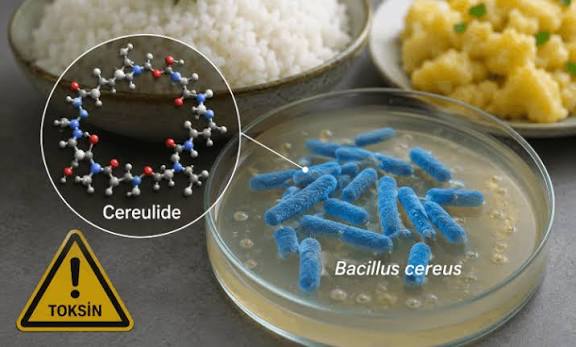
Cereulide is a heat-stable, acid-resistant cyclic dodecadepsipeptide produced by specific strains of Bacillus cereus. It is the causative agent of the emetic food-poisoning syndrome and is responsible for a substantial share of severe B. cereus-associated outbreaks worldwide. Unlike many bacterial toxins, cereulide is pre-formed in food before ingestion and survives cooking, pasteurisation, and gastrointestinal proteases. Its potent potassium-ionophore activity disrupts mitochondrial function and can produce illness ranging from rapid-onset vomiting to, in rare cases, fulminant liver failure and death. The compound has become a priority for food-safety authorities following multi-country recalls of infant formula contaminated with cereulide in 2026.
This reference entry provides a structured scientific overview of cereulide for laboratory professionals, food-safety scientists, public-health officials, and compliance officers. It covers chemical identity, biosynthesis, toxicological mechanism, analytical detection, regulatory status across the European Union, the United Kingdom, and the United States, and the public-health management of contaminated food. No handling, dosage, or sourcing guidance is provided for this toxin. Readers should refer to institutional safety policies and national authorities before any work involving cereulide or suspect food matrices.
Last reviewed: 3 November 2026
Key Takeaways
· Chemical identity: Cereulide is a cyclic dodecadepsipeptide with CAS Registry Number 157232-64-9, molecular formula C₅₇H₉₆N₆O₁₈, and molecular weight 1,153.40 g·mol⁻¹.
· Biological origin: It is produced non-ribosomally by cereulide synthetase, encoded by the ces gene cluster, in emetic strains of Bacillus cereus.
· Mechanism: Cereulide is a potassium-selective ionophore that uncouples mitochondrial oxidative phosphorylation, causing mitochondrial swelling and cellular energy failure.
· Stability: The toxin survives heating at 121 °C for 15 minutes, exposure to pH 2–11, and digestion with pepsin and trypsin.
· Detection: ISO 18465:2017 specifies LC-MS/MS with isotope-labelled internal standard as the reference quantitative method; PCR is used to identify emetic strains, and biological assays provide functional evidence.
· Regulatory status: Cereulide is not a narcotic or controlled substance, but it is regulated as a food contaminant and hazardous laboratory substance. The EU has established an acute reference dose for infants and is developing maximum limits for infant formula.
· Public-health action: Suspect food should not be handled or tasted. Contact local food-safety or public-health authorities; seek urgent medical attention for anyone with severe symptoms.
What Is Cereulide?
Cereulide is a small, lipophilic, non-proteinaceous toxin belonging to the cyclic depsipeptide class. It is composed of twelve alternating amino-acid and hydroxy-acid residues, arranged as three repeating tetrad units. The molecule is structurally related to valinomycin, a potassium-ionophore antibiotic, and shares its bracelet-like conformation when bound to potassium ions. Unlike protein toxins, cereulide is not destroyed by proteolytic enzymes, which contributes to its persistence in the gastrointestinal tract and in food matrices.
Chemical Identity and Nomenclature
The compound was first isolated and characterised in the 1990s from Bacillus cereus associated with vomiting-type food poisoning. Its name derives from B. cereus and the suffix “-ulide,” reflecting its depsipeptide nature. Cereulide is also referred to in the literature as the B. cereus emetic toxin, CER, and cyclic dodecadepsipeptide emetic toxin.
Synonyms and Related Terms
Cereulide is distinct from the diarrhoeagenic B. cereus enterotoxins, including haemolysin BL (Hbl), non-haemolytic enterotoxin (Nhe), and cytotoxin K (CytK). These proteins are heat-labile and are produced during vegetative growth in the small intestine, whereas cereulide is a pre-formed toxin that causes illness by intoxication rather than infection. This distinction is central to food-safety testing and outbreak investigation.
Relationship to Valinomycin
Cereulide and valinomycin share a 36-membered cyclic depsipeptide backbone and a potassium-selective ionophore mechanism. Both molecules transport potassium ions across lipid membranes and uncouple mitochondrial respiration. However, cereulide is more potent in several biological assays and is associated with a distinct food-poisoning syndrome. The structural analogy is useful in analytical method development because valinomycin can serve as a chromatographic reference compound, but the two toxins must be chromatographically resolved to avoid false attribution.
Chemistry and Physicochemical Properties
Cereulide is a neutral, highly lipophilic molecule with no ionisable groups that would confer strong acidity or basicity under physiological conditions. Its physicochemical behaviour is dominated by the cyclic depsipeptide backbone, which forms a potassium-binding cavity and facilitates passive diffusion across biological membranes.
Molecular Structure
The molecule consists of three repeats of the sequence D-O-leucine, D-alanine, L-O-valine, and L-valine. The repeating unit creates a 36-membered ring with alternating ester and amide linkages. In the presence of potassium ions, the ring adopts a bracelet-like conformation in which the carbonyl oxygen atoms coordinate the cation, while the hydrophobic side chains face the exterior. This conformation is remarkably stable and explains the toxin’s resistance to heat and proteolysis.
Stability and Reactivity
Cereulide is one of the most heat-stable bacterial toxins known. Studies have demonstrated that emetic activity remains after heating at 121 °C for 15 minutes, exposure to pH 2 and pH 11, and digestion with pepsin and trypsin. Alkaline conditions combined with prolonged heating can reduce activity, but the effect is not reliably sufficient for food decontamination. The toxin is incompatible with strong oxidising agents and should be protected from light in analytical preparations. These properties mean that conventional cooking, boiling, and pasteurisation cannot be relied upon to inactivate cereulide in contaminated food.
History and Discovery
The emetic form of Bacillus cereus food poisoning was recognised clinically well before the toxin was chemically identified. Outbreaks associated with cooked rice were documented in the mid-twentieth century, and the term “fried rice syndrome” entered the food-safety literature to describe the rapid-onset vomiting that followed consumption of rice dishes left at ambient temperature.
Early Recognition of the Emetic Syndrome
Early epidemiological investigations distinguished two B. cereus syndromes: a diarrhoeal illness with an incubation period of approximately 8–16 hours, and an emetic illness with a much shorter incubation period, often 0.5–6 hours. The emetic syndrome was linked to pre-formed toxin in food, because illness occurred too rapidly for bacterial colonisation and enterotoxin production in the intestine.
Isolation and Structural Elucidation
Cereulide was isolated in the 1990s from B. cereus strains associated with vomiting-type food poisoning. The toxin was shown to cause vacuole formation in HEp-2 cells and to immobilise boar spermatozoa through mitochondrial swelling. Structural studies using mass spectrometry, nuclear magnetic resonance, and chemical degradation established the cyclic dodecadepsipeptide sequence and its close relationship to valinomycin. The name “cereulide” was subsequently adopted for the B. cereus emetic toxin.
Recognition as a Pre-Formed Toxin
The recognition that cereulide is produced in food before ingestion transformed food-safety practice. Standard microbiological testing for B. cereus could detect the organism but not necessarily the toxin, and toxin production was found to be strain-specific. This led to the development of molecular methods for the ces gene cluster and mass-spectrometric methods for direct toxin quantification. The 2026 infant-formula contamination incident further reinforced the need for ingredient-level and finished-product testing.
Bacillus cereus and the Emetic Syndrome
Bacillus cereus is a Gram-positive, aerobic, spore-forming rod found ubiquitously in soil, dust, and food-production environments. The species is genetically heterogeneous, and only a subset of strains carries the cereulide synthetase gene cluster. These strains are often referred to as emetic B. cereus and are assigned predominantly to phylogenetic group III of the B. cereus sensu lato complex.
The ces Gene Cluster and Cereulide Synthetase
Cereulide is synthesised by a non-ribosomal peptide synthetase (NRPS) encoded by the ces gene cluster. The cluster is located on a large plasmid in many emetic strains and includes genes for the synthetase subunits, a putative transporter, and accessory proteins. Because the pathway is non-ribosomal, the toxin is not directly encoded by a structural gene in the conventional sense; PCR detection therefore targets ces genes rather than a single toxin gene. The presence of ces is strongly associated with emetic phenotype, although strain-level variation in toxin production exists.
Food Vehicles and “Fried Rice Syndrome”
The emetic syndrome is most often linked to starchy foods that are cooked, cooled slowly, and reheated: cooked rice, fried rice, pasta, noodles, potato dishes, and rice-based baby foods. B. cereus spores survive cooking, germinate when the food is held at temperatures between approximately 10 °C and 50 °C, and produce cereulide during outgrowth. Reheating does not destroy the pre-formed toxin. The term “fried rice syndrome” reflects the historical association with fried rice dishes, but the risk applies to any improperly stored starch-rich food.
Clinical Presentation and Public-Health Burden
The emetic syndrome is characterised by rapid-onset nausea and vomiting, sometimes accompanied by abdominal cramps and diarrhoea. Symptoms typically resolve within 24 hours, but severe cases can progress to dehydration, electrolyte disturbance, acute liver failure, rhabdomyolysis, metabolic acidosis, and death. Infants, young children, and immunocompromised individuals appear to be at greater risk of severe outcomes. In 2023 alone, several hundred B. cereus toxin-associated outbreaks were reported in eight EU countries and Norway, affecting several thousand people and resulting in 101 hospitalisations and four deaths. A 2026 multi-country infant-formula recall linked to cereulide affected products in 99 countries and was associated with at least 144 suspected or confirmed illnesses across ten countries.
Mechanism of Toxicity
Cereulide exerts its effects primarily through potassium-ionophore activity at mitochondrial membranes. The toxin binds potassium ions with high selectivity and transports them across lipid bilayers, dissipating the mitochondrial membrane potential and uncoupling oxidative phosphorylation. This mechanism is shared with valinomycin but cereulide is substantially more potent in many assay systems.
Potassium-Ionophore Activity
In black-lipid membrane experiments, cereulide increased conductance in KCl solutions in an ionophore-like manner. It formed adducts with K⁺, Na⁺, and NH₄⁺, but conductance was highly selective for K⁺ relative to Na⁺ and H⁺, by approximately three orders of magnitude. The kinetics indicated a stoichiometric ratio between cereulide and K⁺, consistent with a carrier-ionophore mechanism rather than channel formation.
Mitochondrial Effects
In respiring rat-liver mitochondria, cereulide stimulated swelling and respiration in the presence of K⁺ but not in its absence, and it reduced the transmembrane potential under those conditions. In non-respiring mitochondria, swelling occurred in KNO₃ media but not in NaNO₃ media. These findings established that cereulide causes energy-dependent potassium uptake, osmotic swelling, and loss of mitochondrial integrity. The resulting mitochondrial dysfunction can impair ATP production in high-energy tissues such as the liver, kidney, and brain.
Cellular and Organ-Level Consequences
At the cellular level, cereulide produces vacuolation, mitochondrial swelling, and eventually cell death. In vivo, the toxin can translocate from the gut into the portal circulation and systemic circulation, contributing to hepatic steatosis, liver failure, rhabdomyolysis, and multi-organ dysfunction in severe cases. The liver appears to be a principal target organ, and case reports have documented fulminant hepatitis after cereulide-contaminated food consumption. Renal tubular necrosis and encephalopathy have also been described in severe intoxications.
Biomarkers and Translational Research
Research has explored 1-methylnicotinamide and other metabolites as potential biomarkers of cereulide exposure, but no validated clinical biomarker is yet in routine use. Functional assays, including the HEp-2 vacuolation assay and the boar-sperm motility assay, remain important for research and confirmatory testing. These methods measure biological activity rather than molecular identity and therefore complement mass-spectrometric quantification.
Analytical Detection and Testing Methods
The detection of cereulide requires methods that can distinguish the toxin from the producing organism and from other B. cereus toxins. Three complementary approaches are used: molecular detection of emetic strains, mass-spectrometric quantification of the toxin, and functional biological assays. Method selection depends on the purpose: outbreak investigation, food-safety compliance, research, or strain characterisation.
LC-MS/MS and ISO 18465:2017
ISO 18465:2017 is the international reference method for the quantitative determination of cereulide in food. It specifies extraction with acetonitrile, isotope-labelled internal standard calibration, and detection by LC-MS/MS or UHPLC-MS/MS in positive electrospray ionisation mode with multiple reaction monitoring. The FDA Bacteriological Analytical Manual (BAM) describes a comparable procedure applicable to cooked rice, fried rice, cream pastry, hotdog sausage, mini pancakes, vanilla custard, and infant formula. The method uses ¹³C₆-cereulide as the internal standard and a C18 reversed-phase column with an isocratic mobile phase.
PCR and Genomic Detection
Polymerase chain reaction targeting the ces gene cluster is the gold standard for identifying emetic B. cereus strains. PCR can be applied to isolated colonies, food enrichments, and environmental samples. Whole-genome sequencing is increasingly used for strain characterisation and outbreak tracing, but it detects the genetic potential to produce toxin rather than the toxin itself. For this reason, PCR results should be interpreted alongside toxin measurements in outbreak investigations.
Biological and Functional Assays
The HEp-2 cell vacuolation assay detects cereulide through the formation of vacuoles resulting from mitochondrial swelling. The boar-sperm motility assay measures the immobilisation of spermatozoa and is sensitive to cereulide and related ionophores. These assays provide functional evidence of toxin activity but are less specific than LC-MS/MS and are primarily used in research and confirmatory contexts. Cytotoxicity assays using rat-liver mitochondria have also been described for quantitative measurement.
Immunoassays and Emerging Methods
Immunoassay development for cereulide has been challenging because the small cyclic depsipeptide is poorly immunogenic and antibodies can cross-react with related ionophores. Synthetic antibody receptors and lateral-flow formats are under development, but at the time of writing, LC-MS/MS remains the accepted reference method for regulatory and compliance purposes. Fluorescence-based and biosensor approaches are active research areas.
Regulatory Status by Jurisdiction
Cereulide is not classified as a narcotic, psychotropic substance, or chemical-weapon agent under the international conventions that govern those categories. Its regulation is instead distributed across food-safety law, occupational health and safety law, and hazardous-substance classification. The table below summarises the principal frameworks relevant to laboratory professionals and food-business operators.
European Union
In the EU, cereulide is managed as a food-safety hazard under the general food law framework. Regulation (EC) 2073/2005 on microbiological criteria for foodstuffs sets a process hygiene criterion for presumptive Bacillus cereus in powdered infant formula at 50 CFU/g, but it did not originally establish a cereulide limit. Following the 2026 infant-formula incident, EFSA derived an acute reference dose (ARfD) of 0.014 µg/kg body weight for infants, based on emesis as the critical endpoint and a benchmark dose lower confidence limit (BMDL₁₀) of 4.2 µg/kg body weight. EFSA identified concentrations above 0.054 µg/L in reconstituted infant formula and above 0.1 µg/L in follow-on formula as potentially exceeding the ARfD. A draft regulation under public consultation proposes maximum limits for cereulide in dried infant formula, follow-on formula, and infant foods for special medical purposes, with equivalent limits for liquid products after reconstitution.
Netherlands and Belgium
The Netherlands and Belgium apply EU food-safety law directly. The Dutch Food and Consumer Product Safety Authority (NVWA) and the Belgian Federal Agency for the Safety of the Food Chain (FASFC/AFSCA) are responsible for enforcement. Cereulide is not scheduled under the Dutch Opium Act or Belgian narcotics legislation. Laboratories handling cereulide standards must comply with EU CLP labelling, REACH supply requirements where applicable, and national occupational exposure and waste-disposal rules. Food businesses must verify ingredient and finished-product compliance with any applicable EU maximum limits.
United Kingdom
The UK Food Standards Agency (FSA) and Food Standards Scotland established action levels for cereulide in infant and follow-on formula during the 2026 incident. The FSA concluded that its action levels were closely aligned with EFSA’s recommendations and advised a harmonised approach, with products exceeding EFSA-derived levels removed from the market. The UK retains food-safety legislation derived from EU law, and local authorities enforce food hygiene requirements. Laboratory work with cereulide standards is subject to the Control of Substances Hazardous to Health Regulations (COSHH) and GB CLP.
United States
The US Food and Drug Administration has not established a regulatory limit for cereulide in food, but it describes cereulide as a pre-formed toxin and provides a quantitative BAM method for its detection in food products. The FDA method is applicable to cooked rice, fried rice, cream pastry, hot dog sausage, mini pancakes, vanilla custard, and infant formula. Cereulide is not a Drug Enforcement Administration controlled substance. Laboratories are subject to the OSHA laboratory standard (29 CFR 1910.1450), hazard communication requirements, and institutional biosafety and chemical-safety oversight.
International and Trade Context
The 2026 infant-formula incident prompted recalls across 99 countries and led the European Commission to increase controls on imports of arachidonic acid oil, the ingredient implicated as the common contamination source. The WHO reported at least 144 suspected and confirmed illnesses across ten countries. The incident illustrates how a heat-stable toxin can propagate through complex global supply chains and why ingredient-level testing and traceability are essential. International standards, including ISO 18465, provide a common analytical basis for trade and regulatory decisions.
Food-Safety Management and Public-Health Response
Cereulide cannot be reliably eliminated from contaminated food by cooking. Food-safety management therefore focuses on preventing toxin formation, detecting contaminated ingredients and products, and removing affected lots from the market. The public-health response to a suspected outbreak combines epidemiological investigation, food-history interviews, laboratory testing, and product traceability.
Prevention and Control in Food Service
The key control is time–temperature management. Cooked starch-rich foods should be cooled rapidly and refrigerated promptly, and they should not be held at ambient temperature for extended periods. Reheating should be thorough, but it should not be assumed to inactivate cereulide. Food handlers should follow hygiene practices that minimise spore introduction and should avoid preparing large batches of rice or pasta that are cooled slowly in deep containers. These measures reduce the probability of B. cereus outgrowth and toxin production but do not guarantee the absence of pre-formed toxin in raw ingredients.
Infant Formula and Ingredient Supply Chains
The 2026 incident demonstrated that contaminated ingredients can introduce cereulide into products that are not obviously associated with B. cereus food poisoning. Arachidonic acid oil used in infant formula was identified as the likely common source. Manufacturers responded with recalls, and regulators increased import controls. The incident has accelerated the development of maximum limits, certified reference materials, and routine testing programmes for infant-formula ingredients. The JRC’s ERM-BD300 certified reference material, a cooked-rice powder with a certified cereulide mass fraction, supports method validation and quality control in food-safety laboratories.
Outbreak Investigation
An outbreak investigation typically begins with case interviews and food-history analysis, followed by collection of leftover food and clinical specimens. Laboratory confirmation relies on LC-MS/MS for cereulide quantification and PCR for emetic B. cereus in food and isolates. Whole-genome sequencing can link isolates from food and patients. The short incubation period of the emetic syndrome is a useful epidemiological clue, but it can also lead to misattribution to other causes of vomiting. Differential diagnosis includes Staphylococcus aureus intoxication, norovirus, and other short-incubation foodborne syndromes.
Surveillance and Reference Materials
Surveillance systems such as the EU One Health Zoonoses Report provide data on B. cereus toxin outbreaks, hospitalisations, and deaths. Reference materials and proficiency-testing schemes are essential for comparability across laboratories. The JRC’s cereulide CRM and ISO 18465 provide the metrological infrastructure for regulatory compliance. Laboratories should participate in proficiency testing and verify their limit of quantification against the regulatory limit applicable to the product category.
Public-Health Action for Suspect Food: Do not handle or taste suspect food. If you suspect that a food may be contaminated with cereulide, or if a product has been recalled, do not consume it and do not attempt to salvage it by reheating. Contact your local food-safety or public-health authority for instructions on safe disposal and reporting. If a person has consumed suspect food and develops severe vomiting, abdominal pain, confusion, or signs of liver injury, seek urgent medical attention and contact local emergency services.
Safety, Hazards and Handling
Cereulide is a potent mitochondrial toxin. It is hazardous if swallowed, inhaled, or allowed to contact skin or eyes, and it can cause organ damage. This section provides hazard identification and public-health guidance. It does not provide handling, purification, or disposal instructions for pure cereulide. Under the special handling rule for toxins, all work with cereulide must be conducted by suitably qualified personnel in a specialist containment laboratory, and suspect food samples must be referred to the competent authority.
Hazard Identification
Cereulide is toxic by multiple routes. Safety data sheets for commercially supplied cereulide solutions classify the product as flammable, toxic if swallowed, toxic in contact with skin, toxic if inhaled, and capable of causing organ damage. The pure toxin is a potent emetic and mitochondrial poison. There is no established occupational exposure limit specific to cereulide, so a conservative approach based on potent-toxin handling principles is appropriate. The toxin is not volatile, but aerosols and dusts can be generated during manipulation of solid material or during vigorous handling of solutions.
SDS and Classification
Cereulide is supplied as a solution in methanol, ethanol, or acetonitrile for laboratory use. The SDS for the solution reflects both the solvent hazard and the toxin hazard. A representative classification includes H225 (highly flammable liquid and vapour), H301 (toxic if swallowed), H311 (toxic in contact with skin), H331 (toxic if inhaled), and H370 (causes damage to organs). Some supplier SDSs for pure cereulide are not available, and conservative precautionary measures are recommended in the absence of a substance-specific SDS. Institutional chemical-safety officers should review the supplier SDS and incorporate its requirements into the risk assessment.
Do Not Handle — Contact Authorities: Cereulide is a potent toxin. Do not handle pure cereulide, contaminated food, or suspect laboratory waste outside a specialist containment facility. Do not attempt to clean up a spill of pure toxin or to dispose of contaminated food through normal waste channels. Contact your local public-health authority, food-safety agency, or emergency services for guidance. In a medical emergency, contact local emergency services immediately.
Waste and Environmental Considerations
Cereulide-contaminated waste must be treated as hazardous chemical waste and managed according to institutional and national regulations. Because the toxin is heat-stable and lipophilic, ordinary autoclaving or disinfection is not sufficient for destruction. Laboratories should have a written waste-management plan that addresses toxin-contaminated consumables, glassware, and solvent waste. Environmental release should be avoided, and disposal should be performed by a licensed hazardous-waste contractor.
Medical Emergency Response
There is no antidote for cereulide intoxication. Clinical management is supportive and should be directed by qualified medical professionals. Anyone with suspected exposure or ingestion should seek urgent medical attention. If a person is unconscious or has difficulty breathing, call emergency services immediately. Do not induce vomiting unless instructed by a medical professional. Provide the treating clinician with information about the suspected product and the time of exposure, where available.
Research Gaps and Future Directions
Cereulide research has advanced rapidly, but important gaps remain in toxicology, detection, and risk assessment. The 2026 infant-formula incident has accelerated work on maximum limits, reference materials, and rapid screening methods, but several questions remain unresolved.
Standardisation and Method Performance
LC-MS/MS is the accepted reference method, but inter-laboratory comparability depends on calibrant purity, internal-standard availability, and matrix-specific validation. The ISO 18465 method was originally validated across diverse food matrices, but powdered infant formula and complex ingredient streams may require additional cleanup or extraction optimisation. Certified reference materials such as ERM-BD300 are important for method verification, but broader coverage of food matrices is needed.
Toxicological Thresholds
EFSA’s ARfD of 0.014 µg/kg body weight for infants is a major step forward, but it is based on emesis as the critical endpoint and on limited dose–response data. The relationship between cereulide concentration, mitochondrial effects, and severe outcomes such as liver failure is not fully characterised. Research using human-relevant in vitro models and better exposure biomarkers would improve risk assessment. The role of repeated low-level exposure and mixture effects with other food contaminants also warrants investigation.
Climate and Food-System Change
B. cereus is ubiquitous, and food-supply globalisation increases the opportunity for contaminated ingredients to reach multiple markets. Climate change may alter the prevalence and behaviour of toxigenic strains, although the evidence base is limited. More surveillance data are needed to quantify the burden of cereulide-associated illness and to identify emerging food vehicles.
Detection Technology
Rapid, field-deployable screening methods would improve outbreak response and ingredient testing. Immunoassays, synthetic receptors, and biosensors are promising but require validation against LC-MS/MS. PCR-based methods for ces genes are well established, but they do not measure toxin concentration. Integrating genomic and chemical data into a single workflow is a priority for reference laboratories.
Frequently Asked Questions
1. What is cereulide?
Cereulide is a heat-stable, cyclic dodecadepsipeptide toxin produced by emetic strains of Bacillus cereus. It causes the emetic food-poisoning syndrome, with rapid-onset vomiting after consumption of contaminated food, particularly cooked rice and other starchy dishes.
2. What is the CAS number of cereulide?
Cereulide has the CAS Registry Number 157232-64-9. Its molecular formula is C₅₇H₉₆N₆O₁₈, and its molecular weight is 1,153.40 g·mol⁻¹.
3. Is cereulide the same as the diarrhoeal Bacillus cereus toxin?
No. Cereulide is the emetic toxin and is a pre-formed cyclic depsipeptide. The diarrhoeal syndrome is caused by heat-labile protein enterotoxins, including haemolysin BL, non-haemolytic enterotoxin, and cytotoxin K. The two syndromes differ in mechanism, incubation period, and typical foods.
4. Does cooking destroy cereulide?
No. Cereulide survives heating at 121 °C for 15 minutes, exposure to pH 2–11, and digestion with pepsin and trypsin. Boiling, reheating, and pasteurisation cannot be relied upon to inactivate the toxin in contaminated food.
5. How is cereulide detected in food?
The reference method is LC-MS/MS as specified in ISO 18465:2017, using an isotope-labelled internal standard. PCR is used to detect emetic B. cereus strains carrying the ces gene cluster, and biological assays such as the HEp-2 vacuolation assay provide functional evidence.
6. Is cereulide a controlled substance?
No. Cereulide is not scheduled under international narcotics conventions, the US Controlled Substances Act, the UK Misuse of Drugs Act, or Dutch Opium Act. It is regulated as a food contaminant and hazardous laboratory substance.
7. What foods are associated with cereulide poisoning?
Cooked rice, fried rice, pasta, noodles, potato dishes, and other starch-rich foods that are cooked, cooled slowly, and reheated are classic vehicles. Infant formula and contaminated ingredients have also been implicated in recent incidents.
8. What are the symptoms of cereulide poisoning?
Symptoms include rapid-onset nausea and vomiting, sometimes with abdominal cramps and diarrhoea. Severe cases can progress to dehydration, liver failure, rhabdomyolysis, and multi-organ dysfunction. Anyone with severe symptoms should seek urgent medical attention.
9. Is there a regulatory limit for cereulide in food?
The EU has established an acute reference dose for infants and is developing maximum limits for infant formula. The UK has action levels aligned with EFSA. The US has no established regulatory limit but provides a BAM method for detection and describes cereulide as a pre-formed toxin.
10. What should I do if I suspect food is contaminated with cereulide?
Do not handle or taste the food. Do not attempt to make it safe by reheating. Contact your local food-safety or public-health authority for guidance on disposal and reporting. If someone has consumed suspect food and is unwell, seek urgent medical attention.
Further Reading and References
- European Food Safety Authority. (2026). Rapid risk assessment on acute reference dose (ARfD) of cereulide in infants and information on acute consumption of infant formulae. EFSA Journal. https://doi.org/10.2903/j.efsa.2026.9941
- US Food and Drug Administration. (2024). BAM: Quantitative Analysis for Cereulide in Food Products. Bacteriological Analytical Manual. https://www.fda.gov/food/laboratory-methods-food/bam-quantitative-analysis-cereulide-food-products
- International Organization for Standardization. (2017). ISO 18465:2017 Microbiology of the food chain — Quantitative determination of emetic toxin (cereulide) using LC-MS/MS. ISO.
- Mikkola, R., Saris, N.-E. L., Grigoriev, P. A., Andersson, M. A., & Salkinoja-Salonen, M. S. (1999). Ionophoretic properties and mitochondrial effects of cereulide: the emetic toxin of B. cereus. European Journal of Biochemistry, 263(1), 112–117. https://doi.org/10.1046/j.1432-1327.1999.00476.x
- Agata, N., Mori, M., Ohta, M., Suwan, S., Ohtani, I., & Isobe, M. (1994). A novel dodecadepsipeptide, cereulide, isolated from Bacillus cereus causes vacuole formation in HEp-2 cells. FEMS Microbiology Letters, 121(1), 31–34.
- Agata, N., Ohta, M., Mori, M., & Isobe, M. (1995). A novel dodecadepsipeptide, cereulide, is an emetic toxin of Bacillus cereus. FEMS Microbiology Letters, 129(1), 17–20.
- Andersson, M. A., Mikkola, R., Helin, J., Andersson, M. C., & Salkinoja-Salonen, M. (1998). A novel sensitive bioassay for detection of Bacillus cereus emetic toxin and related depsipeptide ionophores. Applied and Environmental Microbiology, 64(4), 1338–1343.
- Ehling-Schulz, M., Fricker, M., & Scherer, S. (2004). Bacillus cereus, the causative agent of an emetic type of food-borne illness. Molecular Nutrition & Food Research, 48(7), 479–487.
- Ehling-Schulz, M., Vukov, N., Schulz, A., Shaheen, R., Andersson, M., Märtlbauer, E., & Scherer, S. (2005). Identification and partial characterization of the nonribosomal peptide synthetase gene responsible for cereulide production in emetic Bacillus cereus. Applied and Environmental Microbiology, 71(1), 105–113.
- European Commission. (2005). Regulation (EC) No 2073/2005 on microbiological criteria for foodstuffs. Official Journal of the European Union.
- European Commission. (2026). Draft regulation amending Regulation (EC) No 2073/2005 as regards cereulide in infant formula and follow-on formula. DG SANTE consultation.
- Food Standards Agency. (2026). Chief Executive’s Report to the Business Committee. UK Government. https://www.gov.uk/government/publications/fsa-bc-260303-chief-executives-report-to-the-business-committee
- Joint Research Centre. (2026). New control material to improve protection of consumers from food poisoning. European Commission. https://joint-research-centre.ec.europa.eu/jrc-news-and-updates/new-control-material-improve-protection-consumers-food-poisoning-2026-02-18_en
- Focus Biomolecules. (2020). Safety Data Sheet: Cereulide (solution in methanol). https://focusbiomolecules.com/wp-content/uploads/2020/07/10-2746-Cereulide-SDS.pdf
- World Health Organization. (2026). Cereulide-contaminated infant formula — global incident update. WHO Disease Outbreak News.
Compliance Disclaimer (Footer): This article is provided for educational and scientific reference purposes only. The compounds discussed are not medicines, foods, cosmetics, or consumer products and are not intended for human or animal consumption. Nothing on this page constitutes medical, legal, or purchasing advice. Laws vary by jurisdiction; readers are responsible for compliance with local regulations. If you are experiencing a medical emergency, contact your local emergency services immediately.
Stay Informed
For updates on food-safety regulation, analytical method development, and scientific literature related to laboratory reference materials, subscribe to the research-chemicalshop.com educational newsletter. This resource is intended for laboratory professionals, researchers, and compliance officers. No purchase or product solicitation is made through this article.
In order to make any purchases visit our shop page.
Author bio: This article was prepared by the research-chemicalshop.com scientific content team and reviewed for regulatory compliance. The content is intended for educational and reference purposes only.
Reviewed for compliance: 3 November 2026.
Leave a Reply