
1B-LSD: 7 Essential Facts I Discovered About This LSD Analogue
When I first stumbled across the compound 1B-LSD in a forensic toxicology journal, I assumed it was just another obscure footnote in the endless catalog of designer drugs. But after spending weeks digging through the actual analytical chemistry data, the animal behavior studies, and the shifting legal gray zones, I realized something important: 1B-LSD is not just a random molecule. It is a carefully designed chemical that tells us a lot about how the human body processes psychedelics—and why lawmakers are struggling to keep up.
I am not a chemist by training, but I know how to read a study. What follows is my personal deep dive into the science, the risks, and the strange legal reality of a substance that exists almost entirely in the shadow of LSD. I will walk you through what the peer-reviewed research actually says, what the mouse models reveal, and why the phrase “pro-drug” keeps appearing in every serious paper on the topic.
1. What Exactly Is 1B-LSD? The Chemistry I Had to Untangle
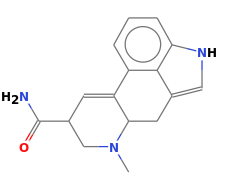
To understand 1B-LSD, I had to first accept a simple fact: it is not LSD. It is a lysergamide, meaning it shares the core ergoline structure of LSD, but with a crucial modification. The full chemical name is 1-butanoyl-lysergic acid diethylamide . In plain English, someone took the LSD molecule and attached a four-carbon chain (a butyryl group) to the nitrogen atom at the number-one position of the indole ring.
Why does that matter? Because that single attachment changes everything about how the molecule behaves in the body—and how it appears on a lab instrument. The molecular formula is C₂₄H₃₁N₃O₂, giving it a molecular weight of roughly 393.5 grams per mole . When I compared that to LSD’s structure, the difference is obvious: LSD has a hydrogen at that position, while 1B-LSD has a bulky butyryl group. This is the same trick used in other analogues like 1P-LSD and ALD-52, where different acyl chains are attached to the same spot .
The compound first appeared on the European research chemical market around 2019. The NIH-funded study that characterized it noted that 1B-LSD is a constitutional isomer of another analogue called 1P-ETH-LAD, meaning the two share the same atoms but arrange them differently . For forensic chemists, this is a nightmare, because distinguishing between them requires careful chromatography and mass spectrometry. For me, it was the first clue that 1B-LSD was designed to be just different enough to slip past existing regulations while still producing LSD-like effects.
2. The Mouse Data: Why 1B-LSD Is Weaker Than LSD (But Still Active)
I always trust animal behavior data more than anecdotal forum posts. Fortunately, the most rigorous study on 1B-LSD used a classic psychedelic behavioral assay: the head-twitch response (HTR) in mice. This is a reliable proxy for 5-HT2A receptor activation, the same receptor that mediates most of LSD’s psychedelic effects.
The results were clear and quantitative. In C57BL/6J mice, 1B-LSD produced a dose-dependent increase in head twitches, but it was significantly less potent than LSD itself. The effective dose (ED₅₀) for 1B-LSD was 976.7 nmol/kg, compared to 132.8 nmol/kg for LSD . If you do the math, that means 1B-LSD is roughly 14% as potent as LSD in this model. In practical terms, you would need about seven times as much 1B-LSD to achieve the same behavioral effect as a given dose of LSD.
Here is what fascinated me: the study authors did not conclude that 1B-LSD is simply a weak psychedelic. Instead, they proposed that it might act as a pro-drug . The logic is elegant. The butyryl group on the nitrogen atom makes the molecule more lipophilic and potentially easier to absorb, but it also blocks the molecule from binding efficiently to the serotonin receptor. However, once inside the body, enzymes called esterases can cleave off that butyryl group, releasing plain LSD. If that happens efficiently in humans, then 1B-LSD is not really a drug in its own right—it is a delivery vehicle for LSD.
I found this hypothesis convincing because it mirrors what researchers have already shown for 1P-LSD and ALD-52, both of which undergo similar N-deacylation to LSD in vitro . The mouse data support it: the dose-response curve for 1B-LSD is consistent with a compound that must be metabolized before it becomes fully active.
3. The Analytical Chemistry: How Labs Detect This Sneaky Molecule
If you are a forensic chemist, your first question about any new designer drug is: how do I identify it? I spent a long time reading the analytical characterization paper, and the methods are genuinely impressive. The researchers used nuclear magnetic resonance (NMR), low- and high-resolution mass spectrometry, gas chromatography (GC), liquid chromatography (LC), and infrared spectroscopy—essentially every tool in the analytical arsenal .
The most important practical finding is that 1B-LSD is unstable under GC conditions. A Japanese study that detected 1B-LSD on blotter paper products noted that the compound easily undergoes deacylation to LSD during gas chromatography analysis . This means that if a lab heats the sample to vaporize it for GC-MS, a significant portion of the 1B-LSD converts to LSD before it even reaches the detector. For a prosecutor, this creates a legal problem: the lab may report “LSD” when the actual substance on the blotter was 1B-LSD. For a user, it creates a pharmacological question: is the drug you took actually the drug that entered your bloodstream?
Liquid chromatography methods avoid this degradation. The NIH study separated 1B-LSD from its isomer 1P-ETH-LAD using UHPLC and LC-DAD, with retention times of 2.213 minutes and 9.03 minutes respectively in different systems . The mass spectrometry fragmentation patterns also differ: 1B-LSD produces a characteristic peak at m/z 43, corresponding to the propyl fragment from the butyryl chain, whereas 1P-ETH-LAD shows a peak at m/z 57 . These details matter because they are the only reliable way to prove what a seized sample actually contains.
4. The Toxicity Question: What the In Silico Models Predict
One of the most frustrating aspects of researching designer drugs is the near-total absence of human safety data. No one has run a Phase I clinical trial on 1B-LSD. No one has measured its pharmacokinetics in healthy volunteers. So when I found a 2026 paper in Archives of Toxicology that used computational models to predict 1B-LSD’s toxicity profile, I read it carefully .
The results are not reassuring, but they are not apocalyptic either. The multi-model in silico approach predicted moderate risks to the circulatory system and kidneys, particularly for 1B-LSD, 1P-LSD, and 1cP-LSD . The authors flagged a specific concern: hERG inhibition, which is a predictor of arrhythmogenic potential. In other words, these compounds might interfere with the heart’s electrical signaling in a way that could be dangerous at high doses or in people with pre-existing cardiac conditions.
The skin and eye irritation models showed something interesting. 1B-LSD and 1cP-LSD had the highest predicted irritation scores among the analogues tested, likely because their bulkier, more hydrophobic acyl groups increase lipophilicity and membrane interaction . This does not mean that touching a blotter will burn your skin, but it does suggest that occupational exposure—for example, in a clandestine lab—could cause transient irritation.
The authors were careful to note that these are predictions, not observations. But the consistency across multiple models gives me pause. The fact that 1B-LSD shares structural features with known cardiotoxic compounds is not something I would want to ignore.
5. The Legal Patchwork: Why 1B-LSD Slips Through the Cracks
Here is where the story gets genuinely absurd. In the United States, 1B-LSD is not explicitly scheduled . It is not on the DEA’s list of controlled substances. However, it could be prosecuted under the Federal Analogue Act if the government can prove it was intended for human consumption and that it is substantially similar to a Schedule I drug . This is the same legal theory that has been used against other lysergamides, but it is a cumbersome tool that requires case-by-case litigation.
Canada is even more permissive: as of 2025, 1B-LSD is not a controlled substance there at all . Germany has taken a different approach, classifying it under the Neue Psychoaktive Stoffe Gesetz (NpSG), which restricts it to industrial and scientific use but does not make it a narcotic . The United Kingdom has swept it up under the blanket Psychoactive Substances Act, which bans anything that produces a psychoactive effect, regardless of chemical structure . Australia and Brazil have placed it in their most restrictive categories .
This patchwork is not an accident. It reflects the fundamental difficulty of regulating chemistry. You can ban a specific molecule, but a chemist can add one carbon to the side chain and create a new molecule that is technically legal. 1B-LSD is a perfect example of this cat-and-mouse game. The butyryl group is just long enough to make it a distinct chemical entity from 1P-LSD, which was already banned in several jurisdictions. Whether that distinction has any meaningful pharmacological significance is almost beside the point—the legal system treats it as a different substance.
6. The Pro-Drug Hypothesis: What It Means for Users and Regulators
I keep coming back to the pro-drug idea because it has implications that go far beyond 1B-LSD itself. If 1B-LSD is indeed a pro-drug for LSD, then its effects in humans would be delayed and prolonged compared to LSD. The butyryl group must be enzymatically removed before the molecule can cross the blood-brain barrier efficiently and bind to 5-HT2A receptors. This means the onset of effects could be slower, and the duration could be different from what users expect.
The NIH authors were explicit about this uncertainty: “Further investigations are warranted to confirm whether 1B-LSD produces LSD-like psychoactive effects in humans” . That sentence is doing a lot of work. It means that everything we know about 1B-LSD’s subjective effects is extrapolation. The mouse data show that it can produce LSD-like behavior, but mice are not humans. The metabolic machinery that converts 1B-LSD to LSD in mouse liver might be more or less efficient than the equivalent enzymes in human liver. The dose that produces a given level of intoxication could be wildly different.
From a regulatory perspective, the pro-drug concept is a nightmare. If 1B-LSD is just a delivery mechanism for LSD, then banning 1B-LSD while leaving other potential pro-drugs legal is a whack-a-mole strategy. Every time you schedule one acyl chain length, a chemist can synthesize the next one up or down the series. The only robust solution would be a generic ban on all N-acylated lysergamides, but that would require legislators to understand the chemistry well enough to write a law that does not inadvertently criminalize legitimate research compounds.
7. My Final Assessment: What I Would Tell a Curious Friend
If a friend asked me what I learned about 1B-LSD, I would start with the basics: it is a synthetic analogue of LSD that appeared on the research chemical market around 2019. It is less potent than LSD in animal models—about 14% as potent—but it likely works by being converted into LSD inside the body. The analytical chemistry is tricky because it degrades during GC analysis, and the legal status depends entirely on which country you are standing in.
Then I would get to the part that matters: we do not know if it is safe. The in silico toxicity models predict moderate cardiovascular and renal risks, and the hERG inhibition signal is something I would not dismiss . The absence of human pharmacokinetic data means that every user is, in effect, running an uncontrolled experiment on themselves. The mouse data suggest that the behavioral effects are LSD-like, but the dose equivalence in humans is unknown.
I would also point out the strange irony of the pro-drug hypothesis. If 1B-LSD is simply a precursor to LSD, then the intense legal focus on the analogue itself is somewhat misplaced. The real question is not “is 1B-LSD legal?” but “is the LSD that your body makes from it legal?” Under the Federal Analogue Act, the answer might be yes—but only if a prosecutor can convince a jury that you intended to consume it. That is not a comfortable place for the law to be.
What struck me most during this research is how much we do not know. We have precise analytical data, careful mouse behavior studies, and sophisticated computational toxicity predictions. But we do not have a single published human pharmacokinetic study. We do not know the subjective effects, the dose-response curve in humans, or the long-term consequences. 1B-LSD is a molecule that exists at the intersection of clever chemistry and regulatory lag, and the people most likely to encounter it are the ones least equipped to evaluate its risks.
I will end with a note on language. The research papers call 1B-LSD a “designer drug” and a “new psychoactive substance.” Those terms are accurate but sterile. What they obscure is that this is a chemical that someone synthesized because they wanted to make a legal version of LSD. Whether it succeeds at that goal is a scientific question. Whether it is safe is a medical question. And whether it should be legal is a political question that none of the existing frameworks seem equipped to answer. I do not have a neat conclusion, because the science does not offer one. What I have is a clearer picture of a molecule that is less than the sum of its parts—and more dangerous for the uncertainty that surrounds it.
[…] numbers are unambiguous. 1B-LSD produced a dose-dependent increase in head twitches, but its ED₅₀ was 976.7 nmol/kg, compared […]
[…] commercial channels, 1B-LSD primarily appears as an analytical reference standard solution. The suppliers I found—GlpBio, for […]