
1B-LSD as a Research Chemical: 6 Facts I Found in the Literature
When I started looking into 1B-LSD as a “research chemical,” the first thing I noticed wasn’t its pharmacology data but a more practical question: how is it actually circulated, who sells it, who buys it, and what happens once it reaches a laboratory. What follows are six facts I compiled from supplier catalogs, analytical chemistry papers, and regulatory documents. One caveat upfront: I am discussing its commercial identity as a “research chemical,” not recommending that anyone use it.
1. Its “Research Use” Identity: Suppliers Only Sell to Laboratories
In commercial channels, 1B-LSD primarily appears as an analytical reference standard solution. The suppliers I found—GlpBio, for instance—clearly state on their product pages that it is “for research and forensic applications” and explicitly add “Products are for research use only. Not for human use. We do not sell to patients”.
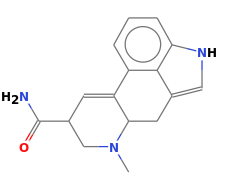
On pricing, GlpBio lists a 100 μg solution (25 μL, 10 mM) at approximately $163–180 USD. The chemical name is listed as (6aR,9R)-4-butyryl-N,N-diethyl-7-methyl-4,6,6a,7,8,9-hexahydroindolo[4,3-fg]quinoline-9-carboxamide, with molecular formula C₂₄H₃₁N₃O₂ and molecular weight 393.5. This is consistent with the molecular formula reported in academic literature.
The contradiction worth noting here is: these products are packaged as “research standards,” yet they are simultaneously controlled or potentially controlled substances. The “research chemical” label is, in a commercial sense, a legal buffer rather than a description of actual use.
2. CAS Number: One Molecule, One Number
The CAS number I found across multiple supplier sources is consistent: 2349376-12-9. Unlike some analogs where number confusion occurs, 1B-LSD’s commercial identifiers are relatively uniform in this regard. This is important for laboratory record-keeping, because if you are purchasing a standard for forensic analysis, an incorrect CAS number means you don’t know what you’re actually testing.
3. GC-MS Analysis Trap: It Degrades During Heating
This is a technical detail I found particularly important. A 2024 forensic chemistry study systematically analyzed 13 LSD analogs, including 1B-LSD. The paper explicitly warned: some LSD analogs undergo alcoholysis during GC-MS analysis, breaking the amide bond and forming other analogs (such as LSD or MiPLA), leading to false analysis results.
Under the chromatographic conditions established in that study, 1B-LSD’s retention time was 30.915 minutes, with a characteristic mass-to-charge ratio (m/z) of 393. For forensic laboratories, this means distinguishing 1B-LSD from other analogs requires careful temperature gradient adjustment and selection of appropriate solvents—otherwise the “1B-LSD” you measure may be partly a signal from LSD converted during the analysis process.
This isn’t an isolated finding. A 2024 Analyst paper on stability noted that collecting samples in NaF tubes can effectively stabilize LSD analogs and minimize conversion of N1-substituted compounds to LSD or MiPLA. This confirms from another angle: 1B-LSD’s “instability” is a genuine analytical challenge.
4. Real Seizure Cases: It Actually Appears on Blotter Paper
The laboratory data isn’t theoretical. A 2020 paper in Molecules reported a case where Swedish Customs seized a single blotter paper, and analysis identified 1B-LSD. The paper noted that this blotter paper typically contains 30–100 μg of the substance, and 1B-LSD is structurally closely related to 1P-LSD and “appears to have only recently entered the street drug market”.
The identification methodology in this case is also worth noting: researchers combined GC-MS, LC-HR-MS/MS, Orbitrap-MS, and 1D/2D NMR, and used a cheminformatics platform for integrated data processing. This indicates that confirming a new substance on a single piece of blotter paper requires the full analytical arsenal—far more complex than routine drug testing.
5. Metabolism Evidence: It Does Convert to LSD
For the “research chemical” identity, the metabolic pathway is a key point. A 2019 study in Analytical and Bioanalytical Chemistry examined the in vitro metabolic fate of nine LSD derivatives using pooled human liver S9 fractions. The conclusion was explicit: for ALD-52, 1P-LSD, and 1B-LSD, deacylation to LSD was observed.
This aligns with the prodrug hypothesis proposed in the 2019 behavioral study—the original paper stated “The possibility exists that 1B-LSD serves as a pro-drug for LSD”. However, that paper also clearly noted: further research is needed to confirm whether 1B-LSD produces LSD-like psychoactive effects in humans. To date, I have not found any controlled human pharmacokinetic data.
6. Global Regulation: A Patchwork
The regulatory status of 1B-LSD varies by jurisdiction, which also explains why it can exist in a gray zone as a “research chemical.” According to compiled information, the current status is approximately as follows:
| Country/Region | Status |
|---|---|
| United States | Not explicitly scheduled; may be covered by the Federal Analogue Act if sold for human consumption |
| Canada | Not scheduled |
| Germany | Controlled under NpSG (industrial and scientific use only) |
| United Kingdom | Covered by the Psychoactive Substances Act |
| Australia | Controlled (S8) |
| Brazil | Prohibited (Class F2) |
This patchwork is not accidental. It reflects the fundamental difficulty of regulating chemistry: you can ban a specific molecule, but a chemist only needs to change the length of a side chain to create a technically legal new molecule. 1B-LSD’s butyryl group is just long enough to distinguish it chemically from 1P-LSD, which has already been banned in several jurisdictions. Whether that distinction has any meaningful pharmacological significance is almost beside the point in the legal system—it is treated as a different substance.
My Bottom Line
If you asked me to summarize 1B-LSD’s “research chemical” identity in one sentence, I would say: it is a molecule that exists in commercial channels as an analytical standard, degrades during detection, converts to LSD in the body, and is regulated differently across countries. Every piece of information the literature provides supports this characterization.
What I cannot tell you is how it behaves in humans at any specific dose. The human data simply doesn’t exist. The prodrug evidence is clear, the animal behavioral data is clear, the analytical chemistry challenges are clear—but the human pharmacology remains a blank space. For anyone considering using it based on its “research chemical” label, that blank space is the most important piece of information.
[…] die strukturell von LSD abgeleitet sind. Dazu gehören Verbindungen wie 1P-LSD, 1cP-LSD, 1B-LSD, 1V-LSD und neuere Varianten wie 1D-LSD oder 1S-LSD . Das UNODC hat bis 2024 mindestens 16 […]