
1B-LSD vs LSD: What I Found in the Research
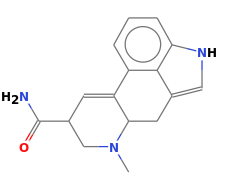
I wanted to understand the actual difference between 1B-LSD and LSD, not the marketing claims or forum anecdotes. After reading the primary literature, the answer turns out to be more interesting than “one is stronger than the other.” The core finding is this: 1B-LSD has very weak direct activity at key serotonin receptors, but it appears to function as a prodrug—after entering the body, it is converted into LSD, which then produces the effects . Below is what the data actually shows.
1. The Potency Gap: 14% of LSD in Mice
The most cited behavioral comparison comes from a 2019 study published in Drug Testing and Analysis. Researchers used the head-twitch response (HTR) in C57BL/6J mice, a standard behavioral assay believed to be mediated largely by 5-HT2A receptor activation—the same receptor thought to drive psychedelic effects in humans .
The numbers are unambiguous. 1B-LSD produced a dose-dependent increase in head twitches, but its ED₅₀ was 976.7 nmol/kg, compared to 132.8 nmol/kg for LSD. That means 1B-LSD acted with approximately 14% of the potency of LSD in this model . In practical terms, you would need roughly seven times as much 1B-LSD to produce the same behavioral response in mice.
The study authors concluded that the behavioral effects of 1B-LSD are “reminiscent of LSD and other serotonergic hallucinogens,” but they also raised a crucial possibility: that 1B-LSD serves as a pro-drug for LSD .
2. The Receptor Data: Why 1B-LSD Barely Works on Its Own
If 1B-LSD were simply a weaker version of LSD, you might expect it to bind the same receptors with lower affinity. But the pharmacological data shows something more dramatic.
A 2020 study in Neuropharmacology directly tested the interaction of 1B-LSD with serotonin 5-HT2 receptor subtypes. The finding: 1-acyl substitution reduced the affinity of LSD for most monoamine receptors, including 5-HT2A sites, by one to two orders of magnitude . In calcium mobilization assays, where LSD acts as an agonist, 1B-LSD showed only weak efficacy or acted as an antagonist .
In other words, the butyryl group on the N1 position of 1B-LSD acts like a chemical blocker. It prevents the molecule from efficiently docking with and activating the receptor that produces psychedelic effects.
3. The Pro-Drug Evidence: Conversion to LSD in the Body
So how does a compound with such poor receptor activity still produce LSD-like behavior in mice? The answer lies in metabolism.
The same Neuropharmacology study used liquid chromatography/ion-trap mass spectrometry to measure plasma levels of LSD in rats treated with related compounds. They detected high levels of LSD in rat plasma after administration of ALD-52 and 1P-LSD, demonstrating that these compounds are “rapidly and efficiently deacylated in vivo” . The authors stated their findings are “consistent with the prediction that ALD-52, 1P-LSD and 1B-LSD serve as prodrugs for LSD” .
An independent in vitro study using pooled human liver enzymes confirmed this: for 1B-LSD, deacylation to LSD was observed . The human body has the enzymatic machinery to remove that butyryl “cap” and release plain LSD.
A 2026 study in rats reinforced the picture. Researchers screened four N1-substituted lysergamides including 1B-LSD and found that despite “generally impaired receptor binding profiles compared with LSD,” all the N1-substituted compounds fully substituted for LSD in behavioral tests. Following injection at behaviorally active doses, they detected similar high blood levels of LSD, again suggesting conversion to LSD in vivo .
4. What This Means (and What It Doesn’t)
Here is where I have to be careful about what the science actually supports.
What the data shows: 1B-LSD is less potent than LSD in animal models, has poor direct receptor activity, and is converted to LSD in both in vitro human liver preparations and in vivo animal models. The prodrug hypothesis is well-supported.
What the data does not show: Whether 1B-LSD produces LSD-like subjective effects in humans at specific doses. The original 2019 paper was explicit: “Further investigations are warranted to confirm whether 1B-LSD produces LSD-like psychoactive effects in humans” . That sentence remains true. There are no controlled human pharmacokinetic studies of 1B-LSD.
The 2026 rat study also raised a point I found important: because conversion to LSD depends on individual metabolic enzymes, “variability in human metabolism of these compounds may result in dramatically different pharmacologic effects across individuals” . Two people taking the same amount of 1B-LSD might convert different fractions of it to LSD, depending on their enzyme activity.
5. My Bottom Line
If I had to summarize the difference in one sentence: 1B-LSD is not a weaker LSD—it is a chemical precursor that relies on your body’s enzymes to become LSD. The 14% potency figure in mice reflects the inefficiency of that conversion process and the weak direct activity of the intact molecule, not simply a less potent version of the same drug.
This has practical implications. The onset of effects from 1B-LSD may be slower than LSD because conversion takes time. The duration and intensity may vary more between individuals due to metabolic differences. And the safety profile is not identical to LSD, because the intact 1B-LSD molecule itself is present in the body before conversion, with unknown effects.
What I cannot tell you is how any of this translates to human experience at specific doses. That research simply does not exist yet. The prodrug mechanism is well-evidenced, but the human pharmacology remains unmeasured.
Leave a Reply